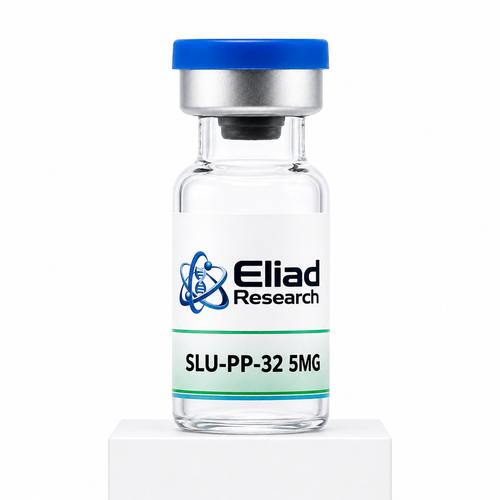

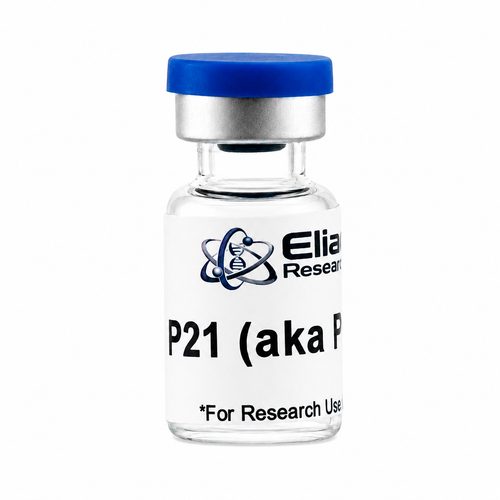
5MG of lyophilized peptide in a sterile 3ml borosilicate vial.
P21 (also called P021 or Ac‑DGGLAG‑NH₂) is a synthetic neurotrophic research peptide designed as a small‑molecule mimetic of CNTF (ciliary neurotrophic factor). Its entire purpose in research is to promote neurogenesis, reduce neuroinflammation, and improve cognitive function in preclinical models.
? What P21 Is
-
CNTF‑mimetic peptide — P21 is derived from the most active CNTF region (amino acids 148–151). CNTF itself is too large to cross the blood–brain barrier, but P21 is engineered to be small, stable, and bioavailable.
-
Cyclin‑dependent kinase inhibitor‑1 — It can block CDK complexes involved in cell‑cycle dysregulation and apoptosis in neuronal tissue.
-
Sequence: AC‑DGGL(A)G‑NH₂
-
Molecular weight: ~578.3 g/mol
? Mechanisms of Action (Preclinical)
-
BDNF–TrkB activation — P21 increases BDNF expression and activates TrkB receptors, triggering ERK1/2, PI3K, PLCγ, and CREB pathways that drive neuroplasticity.
-
Neurogenesis enhancement — Increases hippocampal dendritic spine density by ~50% in rodent models.
-
Tau & amyloid reduction — Reduces tau phosphorylation and β‑amyloid plaque formation in Alzheimer’s models.
-
Anti‑inflammatory effects — Inhibits neuroinflammation and supports synaptic integrity.
These mechanisms make P21 one of the most studied CNTF‑derived neurogenic peptides in preclinical Alzheimer’s research.
? What P21 Is Researched For
-
Cognitive decline (age‑related)
-
Alzheimer’s disease models
-
Neurogenesis & synaptic plasticity
-
Memory formation & LTP
Rodent studies show improvements in:
-
Spatial learning
-
Long‑term potentiation
-
Dendritic spine density
-
Hippocampal structural remodeling
? Administration (Research Context Only)
-
Oral — Designed to be orally bioavailable.
-
Intranasal — Used in some studies for direct CNS access.
-
Subcutaneous — Reported in community research settings.
Examples from sources (not medical advice):
-
SubQ: 100–500 mcg daily (research community)
-
Intranasal: 500 mcg–1 mg daily (research community)
-
Animal studies: 10–15 mg daily or mg/kg‑based dosing depending on model
⚠️ Safety Notes (Preclinical)
-
Reported as well‑tolerated in animal studies and community research use.
-
Possible effects: mild injection‑site irritation (if injected).
-
Not FDA‑approved; all data is preclinical.
? Why P21 Is Considered Unique
Most cognitive‑enhancing compounds work through neurotransmitters. P21 is different — it works by rebuilding neural architecture, not stimulating it. It promotes:
-
Dendritic arborization
-
Synaptic spine formation
-
Structural memory‑circuit repair
This is why it’s considered one of the most promising neurogenic peptides in early Alzheimer’s research.